Three Weeks of Deeper Understanding: Reflections from the Caux Scholars Program Indonesia
By: Anisa Eka Putri Kusmayani
Editor and Proofreader : Ari Budi S
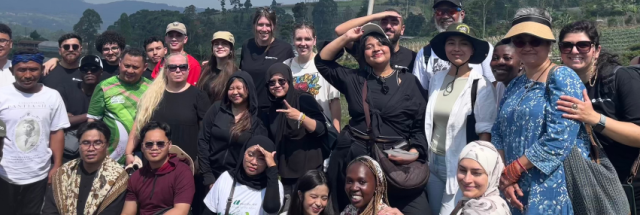
May in Bandung brings pleasantly mild weather, making it a lovely time to explore the city. For me, May 2026 was also the beginning of one of my most meaningful journeys in Bandung, even though I am a local. Against this backdrop, I had the opportunity to spend three weeks learning, reflecting, and connecting with others through the Caux Scholars Program (CSP), a program of Initiatives of Change USA in collaboration with Initiatives of Change Indonesia. The journey began in late May and concluded in June 2026.
It was a valuable experience that deepened my understanding of conflict, strengthened my commitment to peacebuilding, and offered insights that I hope to bring into my work as part of the Trustbuilding Program (TBP) Indonesia. In this article, I share some of my key takeaways as a CSP participant.
Interactive and Experiential Learning
I have always been impressed by how the Initiatives of Change team facilitates complex and sometimes challenging discussions through interactive and experiential learning. I experienced this again during CSP, where every participant was encouraged to engage actively, contribute their perspectives, and bring their unique strengths into the learning environment.
One activity that particularly stayed with me involved a story about citizens who wanted to organise a celebration in a kingdom. Each person was asked to bring the finest milk from their farm to prepare a dessert. Through this simple yet engaging narrative, we explored how storytelling can become a powerful tool for learning and transformation. Although storytelling may seem like a modest approach, it can have a profound impact. It allows us to communicate ideas, invite others into our experiences, and help them understand the values and aspirations that drive our actions. In many ways, storytelling is an everyday practice that enables us to build connections and inspire change.
Another aspect of CSP that I appreciated was its emphasis on adult learning. Rather than simply receiving knowledge, we were encouraged to take ownership of our learning by identifying our objectives, negotiating shared values, and engaging in discussions with fellow participants. This approach reminded me that building a better world requires more than individual commitment. It also demands our willingness to walk alongside others, particularly when navigating differences and conflict.
Conflict, after all, is a natural part of human interaction. What matters is not necessarily whether conflict occurs, but how we choose to respond to it.
Conflict: Understanding Its Intersections
One of the most valuable aspects of CSP was the opportunity to deepen my theoretical and practical understanding of conflict in just three weeks, covering ground that might otherwise take one or two academic semesters to explore. As the Coordinator of TBP Indonesia, I find a more nuanced understanding of conflict particularly relevant to my work.
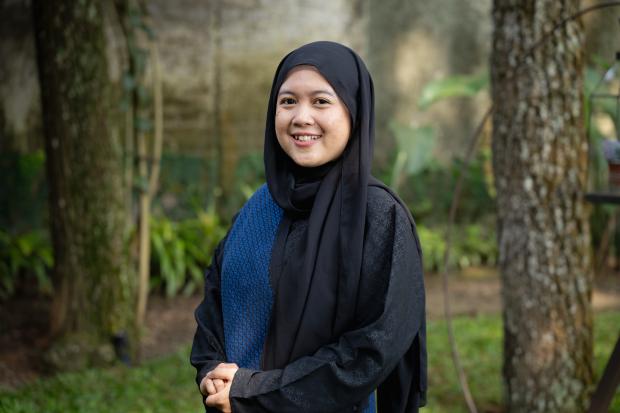
(Ninis wearing traditional woven fabric from the Baduy Indigenous community in Indonesia)
Throughout the program, we learned to analyse and map conflicts using various tools and frameworks. One important insight was that no single tool could fully capture the complexity of a conflict. Each framework revealed different dimensions, reminding us of the importance of combining multiple perspectives to develop a more comprehensive understanding.
Among the ideas that resonated most strongly with me was a principle from narrative therapy that Dr David Anderson Hooker shared with us: “People are not the problem; the problem is the problem.” This became a recurring reminder throughout the program. It is often easier to judge, blame, or label others than to reflect on our own contributions to a conflict. Yet, people and the problems they face are not one and the same. Recognising this distinction creates space for us to address problems collectively rather than treating one another as adversaries.
Reaching this point, however, requires patience, emotional maturity, and a willingness to look inward. Every morning, we participated in an inner listening session, during which we reflected on our behaviour, the conflicts we were experiencing, and our own roles within them. These moments of introspection helped us reconnect with ourselves and approach conflict with greater clarity and self-awareness.
Poetry also became a meaningful medium through which we explored our inner experiences and their connections to wider conflicts. One particularly profound session invited us to consider the needs of people involved in conflict, including those who had experienced harm and those who had caused it. We came to recognise that fundamental human needs and rights are often overlooked or unmet. Rather than expressing these needs constructively or negotiating with one another, people may resort to hurting others in an attempt to reclaim what they feel they have lost.
One of the poems we reflected on portrayed each person as carrying a stone that represented their wounds. These stones required attention and care. This metaphor reminded me that conflict is not simply about competing interests or unmet needs. It is also shaped by the emotional wounds people carry with them. Understanding conflict, therefore, requires us to consider not only what people need, but also the pain and experiences that influence how they respond to others.
CSP also introduced us to trauma-informed approaches to conflict. These sessions explored how individuals can acknowledge and work through their own wounds while learning to recognise the wounds of others with empathy and humility. Healing, we were reminded, does not follow a linear path. It takes time, patience, and space for reflection. In other words, healing is not a destination but an ongoing process.
This understanding is particularly relevant to peacebuilding. Personal wounds and social conflicts do not exist in isolation. They can intersect and influence one another. If we hope to contribute to meaningful social change, we must be willing to acknowledge and process our own experiences while remaining attentive to the experiences of others. Transforming conflict requires not only changes in our external circumstances but also a willingness to examine what we carry within ourselves.
Friendship and Understanding Conflict Across Borders
For three weeks, we shared a learning space with participants from Indonesia, Morocco, the Netherlands, India, Nepal, New Zealand, Lebanon, and other countries. We learned from one another not only about our respective cultures, but also about the conflicts, histories, and social realities that shaped our experiences.
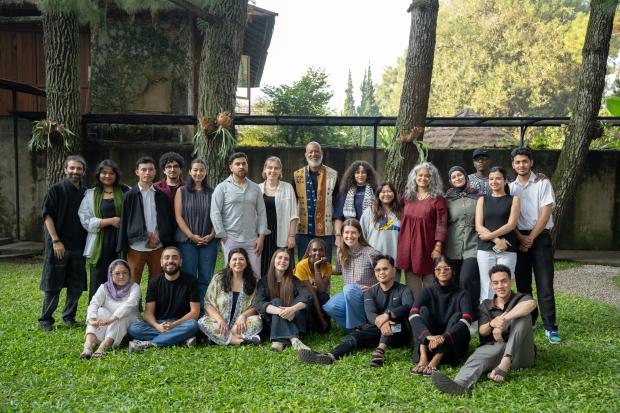
(Group photo with our lecturer and 22 fellow participants)
One particularly striking aspect of the program was the presence of participants from the same country who belonged to different groups involved in conflict with one another. I was deeply moved by the opportunity to witness people whose identities and affiliations placed them on opposing sides of a conflict come together in the same learning environment. Despite the divisions shaped by their national and political contexts, they participated in the program alongside everyone else, demonstrating a shared commitment to learning and engaging with difficult questions.
This experience reminded me that people cannot be reduced to the identities or affiliations through which they are often perceived. When we create spaces where people can meet beyond these boundaries, new possibilities for understanding and connection begin to emerge.
Beyond the formal sessions, our relationships also grew through ordinary, everyday activities. In the evenings and during our free time, some participants went to the gym together, others played UNO or Werewolf, and some went out for dinner while exploring Bandung. These seemingly simple moments became an important part of the experience. They allowed us to connect beyond the roles we occupied in the classroom and to get to know one another as people.
Through these interactions, my belief in the possibility of peace was strengthened. Peace is not built solely through formal dialogues, structured interventions, or high-level negotiations. It can also be cultivated through everyday encounters, shared laughter, mutual curiosity, and the gradual development of trust. Sometimes, it is through these ordinary moments that the boundaries separating us begin to soften.
Carrying the Learning Forward
One article can hardly capture the full depth of my experience during CSP. Three weeks may seem like a short period, but the program offered valuable opportunities to develop new perspectives, cultivate meaningful relationships, and begin building habits of reflection and engagement.
More importantly, the experience challenged me to reconsider how I understand conflict, relate to others, and contribute to peacebuilding. It reminded me that building peace begins with a willingness to listen: to ourselves, to those whose experiences differ from ours, and even to those with whom we find it difficult to agree.
As part of TBP Indonesia, I look forward to bringing these insights into our programs and exploring how experiential learning, inner reflection, and trauma-informed approaches can strengthen our trustbuilding efforts.
Ultimately, the three weeks I spent at CSP were not simply a learning experience to look back on. They were an invitation to continue practising what I had learned: to approach conflict with greater awareness, to meet others with empathy, and to recognise that building a more peaceful world is a collective journey that begins with the choices we make every day.